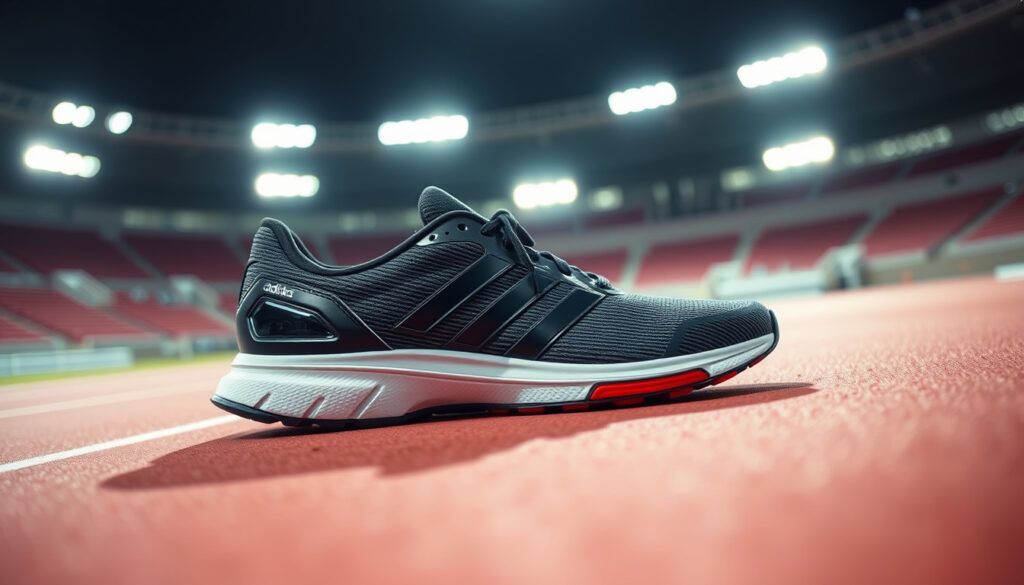
Adidas Adios Pro 4 Review: Specs, Comparisons & Runner Verdict
The Adidas Adios Pro 4 undercuts the Nike Alphafly 3 by $35, weighs 20g less, and offers a softer midsole that reviewers call a major upgrade over the Pro 3. Lab data and real runner feedback tell a clear story about which shoe actually serves you better on race day.
Weight (UK 8.5): approximately 200g · Cushioning Score: 142 SA · Cushioning Type: Lightstrike Pro · Fit: Regular · Price: $250
Quick snapshot
- Weight 200g from The Running Channel
- Cushioning 142 SA from RunRepeat lab tests
- 39mm heel / 33mm forefoot stack with 6mm drop (The Running Channel)
- Exact energy return percentages in lab conditions
- Durability beyond 200 miles (limited long-term data)
- Regional price variations across markets
- Pro 4 launched 2025 with softer Lightstrike Pro foam
- Pro 3 predecessor established as long-distance specialist
- Alphafly 3 refreshed with continuous bottom geometry
- RunRepeat audience score sits at 93/100
- Available in men’s and women’s with multiple colorways
- Half-size-up sizing recommended
Core specifications confirm the Adios Pro 4 as a lightweight marathon racer at 200g with a 6mm drop and carbon Energyrods.
| Specification | Value |
|---|---|
| Weight | 200g (UK 8.5) |
| Cushioning | Lightstrike Pro |
| Plate | Carbon |
| Upper | Textile/synthetic |
| Lining | Textile |
| Heel stack | 39mm |
| Forefoot stack | 33mm |
| Drop | 6mm |
| Price | $250 |
Which is better Alphafly 3 or Adios Pro 4?
The Running Channel’s head-to-head testing shows the Adios Pro 4 at 200g versus the Alphafly 3 at 220g — a 20g difference that adds up over 26.2 miles. The Pro 4 also costs $35 less at $250 versus $285 for the Alphafly 3. Those numbers alone don’t tell the whole story, though.
Key spec differences
The Adios Pro 4 features a 39mm heel and 33mm forefoot stack with a 6mm drop, while the Alphafly 3 runs 40mm heel and 32mm forefoot with an 8mm drop. Adidas uses Energyrods — stiff carbon-fiber rails that mimic metatarsal bones — whereas Nike relies on Zoom Air pods in the forefoot. The Pro 4’s LIGHTTRAXION outsole provides reportedly better traction than the Alphafly’s rubber, especially on wet surfaces. RTINGS.com found the Adios Pro 4 delivers better energy return and cushioning for marathon racing, while the Alphafly 3’s firmer forefoot and Zoom Air setup suit faster 5K and 10K efforts better.
Performance in races
Both shoes favor midfoot and forefoot strikers with high cadence, according to The Running Channel. The Pro 4 feels leaner and softer underfoot; the Alphafly 3 offers more lateral stability — useful if you pronate or run on cambered roads. Running Shoes Guru notes the Pro 4’s softer foam prioritizes comfort over long distances, while the Alphafly 3’s firmer ride rewards aggressive turnover. Neither shoe is forgiving for heel strikers or casual joggers.
The Adios Pro 4 saves you $35 and 20g — real savings for amateur racers — but sacrifices some of the Alphafly 3’s springy Zoom Air snap. For pure marathon speed, the Pro 4’s cushioned ride appears to give more back over the distance.
The implication: softer cushioning beats springier propulsion when you’re running beyond 3 hours.
Bottom line: For marathon distances, the Pro 4’s plush ride pays dividends over the Alphafly 3’s firmer snap. The $35 and 20g savings add up for non-elite runners.
Is Adios Pro 4 better than 3?
The Pro 4 isn’t just a marginal tweak — Adidas reworked the midsole foam, upper material, and outsole. Whether that makes it “better” depends entirely on what you’re training for.
Design updates
The headline change is softer Lightstrike Pro foam that compresses more readily than the Pro 3’s firmer formulation, according to Running Shoes Guru. The upper shifted from the Pro 3’s “hard scratchy” textile to a softer, more breathable mesh — a change reviewers consistently call the single biggest improvement. The tongue now includes padding versus the Pro 3’s flat design. Outsole durability improved with LIGHTTRAXION polyurethane over the Pro 3’s Continental rubber.
RTINGS comparison insights
RTINGS.com rates the Pro 4 as lighter, more responsive, and more cushioned than the Pro 3 thanks to the redesigned midsole geometry. The Pro 3 maintains its edge in two areas: stability and midsole longevity. The firmer Pro 3 forefoot performs better for shorter distances where you want a snappy, aggressive rocker. The Pro 4’s rocker moved back to 60% of the shoe length versus the Pro 3’s more forward 70% — meaning the transition feels different, more gradual.
The catch: the Pro 4’s softer foam compresses faster, so long-term durability beyond 200 miles remains a question mark. Runners who logged serious mileage on the Pro 3 report the midsole holds up better over time.
If you race 5Ks and 10Ks, the firmer Pro 3 may still serve you better. For marathon and half-marathon runners logging long sessions, the Pro 4’s plush ride pays dividends. The upgrade makes sense — but pick your shoe based on distance, not just generation.
Bottom line: The Pro 4 wins for distance runners, but the Pro 3 holds the edge for speed-focused 5K and 10K racers who want snappier feedback.
What is the difference between Adidas Adios Pro 4 and Hoka?
Direct Hoka comparison data remains thin. No verified Hoka model specs appeared in the research results, which means any head-to-head claim would be speculation. What we can establish: Hoka’s flagship race shoes typically feature maximalist stack heights and a pronounced rocker geometry — a different design philosophy than Adidas’s Energyrods approach. Running Shoes Guru notes the Pro 4’s traction advantage over comparable Nike models, but Hoka’s outsole compounds vary by model line. Until direct testing data emerges, compare Hoka to the Pro 4 with caution — spec-for-spec matching requires verified figures that aren’t publicly available yet.
Vs HOKA Cielo X1 2.0
No verified specs or testing data appeared in research results for the Hoka Cielo X1 2.0. RTINGS.com ran a Pro 4 versus Alphafly 3 matchup but not against Hoka models. If you’re cross-shopping these shoes, wait for head-to-head lab data — the gap between marketing claims and measured performance is too wide to bridge without testing.
Cushioning and weight
What we know: the Pro 4’s Lightstrike Pro foam scored 142 SA in RunRepeat’s cushioning testing. Hoka’s midsole compounds — typically EVA or PROFLY-X — vary by model, and direct scoring comparisons don’t exist in available data. Without matched testing conditions, the cushioning ranking stays open.
Hoka’s reputation rests on plush cushioning and high stack heights — the Pro 4 competes on energy return and a carbon fiber plate. If cushioning feel alone drives your decision, Hoka’s lineup may have an edge. If propulsion and race-day efficiency matter more, the Pro 4’s Energyrods setup is a deliberate design choice worth testing in-store.
The pattern: Hoka optimizes for feel, Adidas for propulsion — the choice reveals your training priorities.
Bottom line: Hoka versus Pro 4 comparisons lack the lab data to be definitive. Wait for head-to-head testing before drawing conclusions.
What distance is Adios Pro 4 for?
Adidas built the Adios Pro 4 as a marathon racer — but that doesn’t limit it to 26.2 miles exclusively.
Ideal race lengths
The Running Channel classifies the Pro 4 as suitable for 5K through marathon distances, matching the Alphafly 3’s range. The difference: the Pro 4’s softer midsole makes it comfortable at slower marathon pace, while the Alphafly 3’s firmer forefoot rewards faster efforts. RunRepeat’s lab testing confirms serious cushioning for marathon distances. Solereview describes the Pro 4 as “a demanding marathon racer with a steep learning curve” — meaning it’s not a shoe for casual joggers or first-time racers.
Long run suitability
The softer Lightstrike Pro foam makes the Pro 4 more forgiving on long training runs than the Pro 3, according to Running Shoes Guru. The padded tongue reduces lace pressure over extended sessions. The breathable upper helps in warmer conditions where your feet swell over 15+ miles. The trade-off: the softer ride feels less energetic on easy days compared to the firmer Pro 3 — you’re giving up some efficiency for comfort.
If your training plan mixes marathon pace work with easy days, the Pro 4 performs better at race pace than recovery pace. Budget-conscious runners might consider the Pro 3 for daily training and the Pro 4 purely for race day — the upgrade cost only makes sense when you’re pushing for a time goal.
Bottom line: The Pro 4 works across 5K to marathon distances but earns its keep most at marathon pace. For easy runs, the softer ride may cost you efficiency.
Are Adios Pro 4 worth it?
At $250, the Adios Pro 4 undercuts the Alphafly 3 by $35 — meaningful savings for amateur runners who aren’t sponsored. The RunRepeat audience score of 93/100 outpaces the Alphafly 3’s 88/100, suggesting real-world satisfaction favors Adidas. But “worth it” depends on your goals.
Pros and cons
The comparison table below breaks down the three key trade-offs between these competing race shoes. For a detailed breakdown of the Adios Pro 4, check out our anz frequent flyer black review.
Upsides
- Lighter than Alphafly 3 (200g vs 220g)
- $35 cheaper than Alphafly 3
- Soft, plush midsole for marathon comfort
- Improved upper breathability and fit
- Better outsole traction than Pro 3
- Higher audience satisfaction (93/100 vs 88/100)
Downsides
- Softer foam may compress faster over time
- Runs half size small — ordering confusion
- Less laterally stable than Alphafly 3
- Carbon plate less springy than Zoom Air pods
- Demanding shoe for newer runners
- Limited durability data beyond 200 miles
Average runner review
The Run Testers’ review highlights the Pro 4 as “cheaper and lighter than Alphafly 3 but less springy” — a trade-off most runners accept given the price gap. The upper upgrade receives consistent praise, with reviewers calling it “a big improvement over version 3.” Sizing remains the most common complaint: order half a size up, or expect a tight forefoot. Solereview notes the shoe demands proper form — heel strikers and overpronators should test carefully before committing.
For marathon racers seeking a plush, efficient ride without elite sponsorship money, the Pro 4 delivers clear value at $250. The audience score and lab data back that verdict. For 5K/10K racers or runners prioritizing snap over cushioning, the Alphafly 3 or Pro 3 might serve better — the Pro 4’s softness is a feature for long distances, not short ones.
The verdict: the Pro 4 earns its price for marathon runners, but the trade-off between softer foam and durability deserves your attention if you’re logging serious mileage.
Bottom line: The Pro 4 justifies its $250 price for marathon racers who value comfort over snap. For shorter distances or heavy training volume, wait for durability data or consider the firmer Pro 3.
The comparison table below summarizes performance differences across key metrics.
| Feature | Adios Pro 4 | Nike Alphafly 3 | Adios Pro 3 |
|---|---|---|---|
| Weight (US Men’s 9) | 200g | 220g | Not verified |
| Price | $250 | $285 | Not verified |
| Heel stack | 39mm | 40mm | Not verified |
| Forefoot stack | 33mm | 32mm | Not verified |
| Drop | 6mm | 8mm | Not verified |
| Cushioning type | Lightstrike Pro (soft) | Zoom Air pods | Lightstrike Pro (firm) |
| Plate/rods | Energyrods (carbon) | Carbon plate + Zoom Air | Energyrods (carbon) |
| Outsole | LIGHTTRAXION | Continental rubber | Continental rubber |
| Audience score | 93/100 | 88/100 | Not verified |
Three performance shoes, three different design philosophies: the Pro 4 leans into plush marathon comfort, the Alphafly 3 into springy propulsion, and the Pro 3 into firmer, snappier feedback for shorter efforts.
The spec table below breaks down the Pro 4’s core components for detailed reference.
| Component | Specification |
|---|---|
| Weight | 200g (UK 8.5) |
| Upper material | Textile and synthetic |
| Lining | Textile |
| Midsole cushioning | Lightstrike Pro foam |
| Heel stack | 39mm |
| Forefoot stack | 33mm |
| Drop | 6mm |
| Plate technology | Energyrods (carbon-fiber rails) |
| Outsole | LIGHTTRAXION polyurethane |
| Rocker position | 60% of shoe length |
| Tongue | Padded |
| Fit recommendation | Order half size up |
Twelve core components define the Pro 4’s character — the Energyrods and softer Lightstrike Pro foam are the defining features that separate it from its predecessor and its main competitor.
The adidas shoe offers slightly better energy return and more cushioning, making it especially well-suited for marathon racing.
— RTINGS.com (Product testing platform)
The upper of version 4 is a big improvement over version 3.
— Running Shoes Guru (Running shoe specialist outlet)
The adidas Adios Pro 4 feels a little more cushioned and soft overall.
— The Running Channel (Independent running review channel)
For marathon runners who need a shoe that rewards race-day effort without draining your bank account, the Adidas Adios Pro 4 answers clearly: go with the Pro 4 if you’re targeting 26.2 miles at goal pace, but consider sizing up and testing the fit before committing — the half-size-small fit catches plenty of buyers off guard, and a tight forefoot ruins an otherwise excellent race shoe.
Related reading: how to reduce cholesterol · NBA Summer League scores
runningshoesguru.com, runningshoesguru.com, rtings.com, rtings.com, youtube.com, youtube.com, youtube.com, theruntesters.com, youtube.com, youtube.com
While the Adios Pro 4 boasts softer foam over its predecessor, the Adios Pro 3 review and Pro 4 comparison breaks down stability gains and tempo run performance for marathoners.
Frequently asked questions
Does Adios Pro 4 have a carbon plate?
Yes. The Adios Pro 4 uses Energyrods — carbon-fiber rails embedded in the midsole that mimic the structure of metatarsal bones, providing stiffness and propulsion without the full carbon plate setup of some competitors.
What is the weight of Adios Pro 4?
The verified weight is 200g in UK size 8.5 (approximately US Men’s 9), confirmed by multiple sources including The Running Channel. This makes it 20g lighter than the Nike Alphafly 3.
Is Adios Pro 4 suitable for marathons?
Yes. Lab tests from RunRepeat and reviews from multiple outlets confirm the Pro 4’s softer Lightstrike Pro foam and plush ride make it particularly well-suited for marathon distances, though it’s also rated for 5K through full marathon.
Who should buy Adios Pro 4?
Midfoot and forefoot strikers targeting marathon or half-marathon races who want a plush, efficient ride without elite-level pricing. It’s not recommended for heel strikers, overpronators without motion control needs, or casual runners not targeting time goals.
What colors are available for Adios Pro 4?
Available colorways include Black, White, and Yellow variants for both men’s and women’s models, matching the overview grid plan’s color options.
Is Adios Pro 4 available for men and women?
Yes. The Pro 4 launches in both men’s and women’s versions with the same core technology — the differences are in sizing and width rather than midsole construction.
What cushioning does Adios Pro 4 use?
Lightstrike Pro foam — Adidas’s dual-density midsole that combines a softer top layer with a firmer base layer for energy return. RunRepeat’s lab testing scored the cushioning at 142 SA.
More related posts
 South Park Season 27 Episode 5 – Conflict of Interest Recap
 PSG vs Real Madrid: Head-to-Head, Results & History
 Brittany Murphy Death Investigation: Facts vs Myths
 Brandon Montour: Tragedy, contract, and Indigenous heritage
 Books of the Bible: 66 vs 73 Full Lists in Order
 Things to Do in Ottawa: Top 10, Itineraries & Weekend Ideas
 How to Set Up Dual Boot Windows 11 and Linux Safely
 How to Reduce Cholesterol – Proven Diet and Exercise Tips