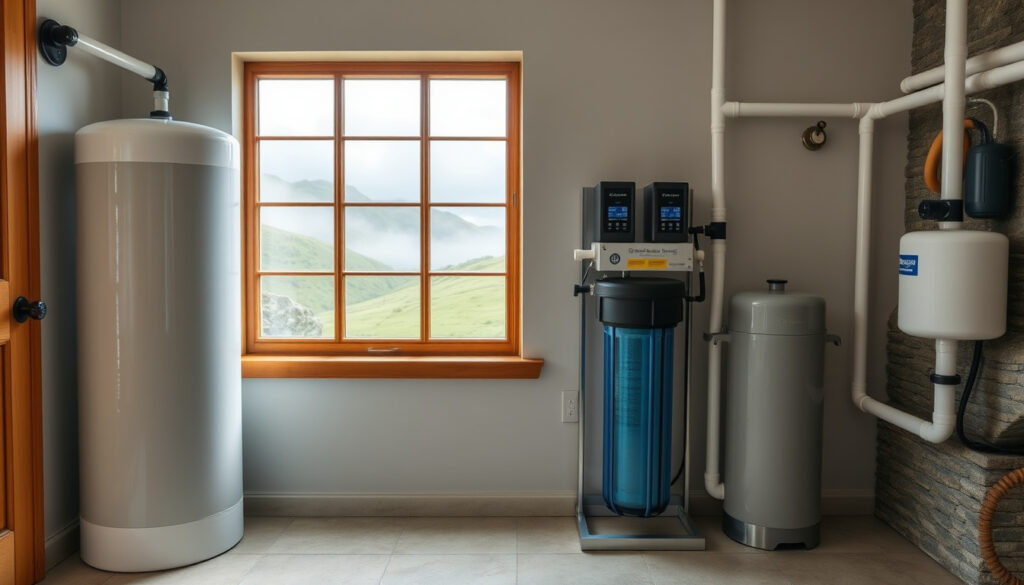
Whole House Reverse Osmosis System: Worth It for Ireland Radon?
Ireland has a radon problem unlike most of Europe — roughly 500 people a year develop lung cancer from prolonged exposure, and many never even know the gas is in their homes until they test. Most guidance focuses on air radon, but the EPA also flags radon in drinking water as a secondary route, producing radioactive byproducts when water is aerated in showers or kitchen taps. If you live in a designated high-radon area and have considered a whole-house reverse osmosis (RO) system to protect your water supply, you are probably wondering whether it is actually worth the investment. This guide walks through costs, limitations, maintenance needs, and — critically — whether RO can remove radon from your water, drawing on Irish government guidance and verified data from water filtration specialists.
Typical Cost Range: €239 – €1,195 · Contaminant Removal: 99.9% (celticwatersolutions.ie) · Radon Removal: Possible (Drinking Water Inspectorate) · Cryptosporidium Removal: Yes (CDC) · Ireland Providers: 5+ top results
Quick snapshot
- Cryptosporidium removal confirmed (CDC)
- Typical whole house RO cost: $3,000 (ESP Water Products)
- Water waste ratio: 2:1 (ESP Water Products)
- RO membrane replacement every 2-4 years
- Exact radon removal efficiency for Irish water conditions
- Variability across different radon concentrations
- Limited Ireland-specific user reviews for whole house RO
- EPA Ireland radon guide: October 2022
- Radon barriers required in Irish buildings since 1998
- Radon fan replacement needed every 3-5 years
- Irish homeowners must first test for radon in air and water
- Choose between RO, radon sump, or granular activated carbon
- No government grants available for radon remediation
Key pricing and capability data from Ireland’s leading water treatment providers and government sources appears in the table below.
| Fact | Value | Source |
|---|---|---|
| Starting Price | €239 (aquaeuro.ie) | Aquaeuro |
| Premium Option | €1,195 (renewellwater.com) | Renewell Water |
| Removal Rate | 99.9% (celticwatersolutions.ie) | Celtic Water Solutions |
| Radon Capable | Yes (gov sources) | EPA Ireland |
| EPA Radon Mitigation Avg | $1,200 | RadonSeal |
| Ireland Active Radon Sump Avg | €925 | Aereco Ireland |
| Radon Action Level | 4.0 pCi/L | RadonSeal |
| Radon Fan Replacement | 3-5 years | RadonSeal |
| Ireland Radon Barriers Required Since | 1998 | Irish Times |
| Ireland Radon Test Kit Cost | €50 | Irish Times |
| QALY Cost-Effective Threshold | €20,000-€45,000 | ESRI Ireland |
Is a whole house reverse osmosis system worth it?
Whether a whole-house reverse osmosis system is worth the investment depends entirely on which problem you are trying to solve. For Irish households in high-radon areas, the calculation is not straightforward — radon enters homes primarily through air pathways, not water, which means an RO system alone will not address the dominant exposure risk. ESP Water Products (water filtration specialists) notes that whole-house RO is not typically recommended for radon because it addresses water contamination rather than airborne radon, which represents the greater health concern for most Irish homeowners.
Pros of whole house RO
- Removes up to 99% of contaminants including PFAS, heavy metals, and microplastics (Crystal Quest, RO manufacturer)
- Protects plumbing and appliances from scale buildup caused by hard water
- Single system treats all water points throughout the home, not just kitchen taps
- Eliminates cryptosporidium — the CDC confirms reverse osmosis effectively removes this parasite from drinking water
- Improves water taste and odor, particularly important in areas with chlorine or mineral-heavy supply
Cons and alternatives
- Whole-house RO wastes approximately two gallons of water for every gallon treated (ESP Water Products)
- Typical cost runs $3,000 or more excluding pre-treatment filters and professional installation
- Pre-treatment with sediment and chlorine filters is required in roughly 85% of homes to protect the RO membrane
- Produces slightly acidic water that may corrode copper pipes over time
- Radon sumps average €925 in Ireland compared to $3,000+ for whole-house RO — a significantly cheaper option for radon in air
- Granular activated carbon filters and radon aeration systems offer lower-cost alternatives for waterborne radon
How much does a whole home reverse osmosis cost?
Pricing for whole-house reverse osmosis systems varies considerably depending on capacity, brand, and whether you factor in installation. Irish market data shows entry-level systems start around €239 through providers like Aquaeuro, while premium options from sources like Renewell Water reach €1,195 or higher. For context, US market pricing from ESP Water Products (water systems retailer) places the typical installed cost around $3,000, with complete systems running $4,500 to $15,000 depending on flow rate requirements and pre-treatment needs.
Price ranges from providers
- Entry-level whole house RO: €239 (Aquaeuro Ireland)
- Premium systems: €1,195+ (Renewell Water)
- Typical US market installed cost: $3,000 (ESP Water Products)
- High-capacity systems (1500 GPD+): $5,902+ including storage tank (Crystal Quest)
- Complete system pricing: $4,500-$15,000 (Crystal Quest)
Factors affecting cost
Several variables push the final price beyond the base unit cost. Professional installation adds $500-$2,000 depending on accessibility and whether permits are required, according to Crystal Quest (RO manufacturer). Pre-treatment systems — sediment filters, chlorine removal, water softeners — are essential in approximately 85% of homes to prevent premature membrane fouling, adding €200-€800 to total setup costs. Storage tanks for maintaining adequate flow rates add $1,740 or more for higher-capacity units.
For Irish homeowners, the comparison with radon-specific solutions is stark: EPA Ireland guidance places radon mitigation costs significantly lower than whole-house RO. Radon sumps in Ireland average €925, ranging from €400 to €1,500, according to Aereco Ireland (ventilation specialists). The EPA estimates fan-based radon mitigation installation at $800-$2,500 with average ownership costs exceeding $7,000 over ten years including energy and fan replacement every 3-5 years.
The pattern: three distinct cost tiers emerge for Irish homeowners — budget RO units for €239, radon sump systems around €925, and premium RO installations potentially exceeding €1,195 — each solving different problems at vastly different price points. The trade-off is that the cheapest option for radon in air is not the same as the cheapest option for water quality improvement.
Whole house RO costs $3,000 on average — but that figure excludes pre-treatment, storage tanks, and $500-$2,000 in professional installation. Irish homeowners should budget 40-60% above the base unit price.
What are the negatives of reverse osmosis?
Reverse osmosis systems come with trade-offs that extend well beyond purchase price. The most significant operational downside is water waste: RO systems discharge roughly two gallons of brine for every gallon of purified water produced, potentially doubling household water bills in areas with metered pricing, according to ESP Water Products (water filtration specialists). This inefficiency is particularly concerning in Ireland, where water charges remain a live political issue for many households.
Major problems
- Water waste at 2:1 ratio significantly increases utility costs
- RO membranes require replacement every 2-4 years; pre-filters need annual changes
- Pre-treatment systems required in 85% of installations add ongoing maintenance burden
- Storage tanks (200-500 gallon capacity) necessary for adequate flow rates
- Not a radon-specific solution — addresses water contamination, not airborne radon
- No government grants available for RO installation in Ireland (Aereco Ireland)
Water quality downsides
RO systems remove beneficial minerals alongside contaminants, producing water with a slightly acidic pH that National Water Service (water systems retailer) notes may accelerate corrosion in copper plumbing over time. This “aggressive” water quality requires remineralization filters if you notice plumbing damage or metallic taste after installation. Additionally, RO systems do not address radon in air — the primary exposure pathway for Irish households with elevated indoor radon levels.
What this means: Irish homeowners installing whole-house RO without first testing for airborne radon may spend thousands on water filtration while the larger health risk remains unaddressed. The CDC confirms RO effectively removes cryptosporidium from drinking water, but this addresses a waterborne pathogen problem, not the radon gas exposure that accounts for roughly 500 lung cancer deaths annually in Ireland.
What is the lifespan of a reverse osmosis system?
The operational lifespan of a whole-house reverse osmosis system depends heavily on maintenance frequency and incoming water quality. According to National Water Service (water systems retailer), RO membranes typically require replacement every 2-4 years, while pre-filters should be changed annually to prevent fouling and maintain flow rates. Without regular maintenance, membrane degradation leads to diminished contaminant removal — a particular concern for households relying on RO for specific water quality issues.
Maintenance needs
- Pre-filters: annual replacement (sediment, carbon blocks)
- RO membranes: 2-4 year replacement cycle depending on usage and water quality
- Storage tank: periodic inspection and sanitization every 1-2 years
- Pre-treatment system: ongoing costs for water softener salt, filter cartridges
- Professional servicing recommended every 2-3 years for whole-house units
Replacement schedule
Budget-conscious homeowners should factor ongoing maintenance into the total cost of ownership. A full membrane replacement plus labor can run $300-$600, while pre-filter changes add $50-$100 annually. For comparison, radon fan replacement — a component of standard radon sump systems — costs $300-$600 every 3-5 years according to RadonSeal (mitigation experts), making the maintenance profile for radon-specific systems less demanding than whole-house RO.
The trade-off: RO systems demand more frequent maintenance attention than point-of-entry water softeners or standard carbon filters. Irish homeowners in hard water areas should expect higher maintenance costs and more frequent filter changes due to mineral buildup.
Can reverse osmosis remove radon and cryptosporidium?
The ability of reverse osmosis to remove radon from water is technically established but practically complicated. EPA Ireland guidance acknowledges that RO can treat radon in drinking water, though the mechanism works differently than radon air mitigation. When water passes through the RO membrane under pressure, radon dissolved in the water is stripped out alongside other contaminants. However, this addresses only waterborne radon — not the airborne radon that enters homes through foundation cracks, gaps in flooring, and soil beneath the building.
Radon removal
Canadian government guidance (public health authority) indicates RO is capable of reducing radon levels in drinking water, but efficiency varies based on radon concentration, water temperature, and system maintenance. The critical distinction for Irish homeowners is that radon in water represents a secondary exposure route compared to airborne radon, which produces inhalation risk when water is aerated during showering or cooking. EPA Ireland notes that radon sump running costs exceed those of active sumps for air radon mitigation, suggesting RO is not the preferred approach even for waterborne radon in the Irish context.
Cryptosporidium and other contaminants
Cryptosporidium removal is well-documented: the CDC (US public health authority) confirms reverse osmosis effectively removes this parasitic cyst from drinking water, achieving 99.9% reduction when membranes are properly maintained. For Irish households on private wells or rural water supplies, this represents a meaningful benefit that air radon mitigation systems simply cannot provide. Beyond cryptosporidium, RO systems remove up to 99% of PFAS compounds (“forever chemicals”), heavy metals, nitrates, and total dissolved solids according to Crystal Quest (RO manufacturer).
What cannot be filtered
- Airborne radon — the primary exposure pathway for most Irish homes
- Radon that has already entered through foundation or flooring gaps
- Volatile organic compounds with high vapor pressure may pass through RO
- Bacteria trapped in biofilm on pipe walls — RO does not address biofilm contamination
- Temperature fluctuations that affect radon outgassing rates
Irish homeowners in high-radon areas face a two-front battle: airborne radon entering through building envelopes, and potentially elevated radon in water supplies. RO addresses one front at considerable cost, while radon sumps address the other at roughly one-third the price.
Whole House RO vs Alternatives — Specification Comparison
Four treatment approaches dominate the Irish market for households dealing with water quality or radon concerns: whole-house reverse osmosis, point-of-use RO under-sink units, radon sumps for air mitigation, and granular activated carbon filtration. Each serves different needs at different price points.
| System Type | Primary Function | Typical Cost | Maintenance Burden | Radon in Water | Radon in Air |
|---|---|---|---|---|---|
| Whole House RO | All water points filtered | $3,000+ / €239+ entry | High (filters, membrane) | Yes | No |
| Point-of-Use RO | Kitchen/bathroom only | $150-$500 | Medium | Yes | No |
| Radon Sump | Air radon extraction | €400-€1,500 | Low (fan every 3-5 years) | No | Yes |
| Granular Activated Carbon | Chemical contaminants, some radon | $300-$1,000 | Medium | Partial | No |
The pattern: no single system addresses both waterborne and airborne radon simultaneously. Irish homeowners must first identify whether their primary concern is radon in air (measured in pCi/L indoors) or radon in water (measured in Bq/L in the supply), then choose the appropriate mitigation approach rather than assuming one system solves everything.
Upsides and Downsides Summary
Upsides
- 99.9% contaminant removal including PFAS, heavy metals, and microplastics
- Effectively eliminates cryptosporidium from drinking water (CDC confirmed)
- Single installation treats all household water points
- Improves water taste and protects appliances from scale buildup
- Reduces chemical exposure from chlorine and agricultural runoff
Downsides
- Significant water waste at 2:1 ratio increases utility bills
- Does not address airborne radon — the dominant exposure risk for Irish homes
- Higher total cost than radon-specific systems for air remediation
- Maintenance-intensive with membranes, filters, and pre-treatment needs
- No Irish government grants available for RO installation
- Produces slightly acidic water requiring potential pipe corrosion management
What the Expert Sources Say
ESP Water Products (Water Filtration Experts)
Typically, the cost in Ireland to retrofit an active radon sump is about €925 (ranging from €400-€1500) — a fraction of what a whole-house reverse osmosis system would cost for similar radon-focused benefit.
Aereco (Ventilation Specialists)
Buildings in a high radon area constructed since 1998 must have a radon barrier in place — but older properties in designated hotspots remain the most vulnerable, and options for addressing existing radon problems are limited for homeowners without government support.
EPA Ireland (Government Regulatory Authority)
Radon sump running costs are higher than active sumps per our remediation guidance — meaning even water-focused radon solutions carry ongoing operational expenses that homeowners should factor into their decision.
The consensus from Irish radon authorities and water filtration specialists points in the same direction: whole-house RO is not the go-to recommendation for radon remediation, but it provides substantial value for households with multiple water quality concerns. The key is testing first — knowing whether radon is present in your air, your water, or both determines which intervention makes financial and health sense.
Bottom line
For Irish homeowners in high-radon areas, a whole-house reverse osmosis system addresses water contamination but not the airborne radon responsible for the majority of radon-related lung cancer cases in Ireland. The financial case weakens further when compared to radon sumps averaging €925 versus $3,000+ for whole-house RO — making the more targeted solution the more cost-effective one for radon in air. The exception is households dealing with multiple water quality issues: hard water, chemical contamination, cryptosporidium risk on private wells, or PFAS exposure. In these scenarios, the 99.9% contaminant removal rate and whole-house coverage justify the investment on its own merits, but radon-specific concerns should be addressed separately through air testing and appropriate mitigation.
Related reading: Water Whole House Filter
espwaterproducts.com, nationalwaterservice.com, crystalquest.com, airthings.com, waterfilterguru.com, youtube.com
The €239-€1,195 price range for whole house reverse osmosis closely aligns with typical RO system costs in Ireland for Irish households addressing radon and other contaminants.
Frequently asked questions
What makes a house more likely to have radon?
Irish buildings with poor ventilation, solid concrete floors without radon barriers (required since 1998), and locations in EPA-designated high-radon areas face the highest risk. Homes built before radon barrier requirements are most vulnerable, particularly those with suspended wooden floors or exposed soil beneath the building.
Best whole house reverse osmosis system?
The best system depends on your water quality, flow rate needs, and maintenance willingness. Irish providers like Aquaeuro and Renewell Water offer entry-level and premium options respectively. For high-contaminant loads or very hard water, systems with pre-treatment and larger storage tanks perform better but cost more upfront.
Best reverse osmosis system Ireland?
Irish households should prioritize systems compatible with local water conditions — typically those rated for hard water and requiring minimal pre-treatment. Celtic Water Solutions and Aquaeuro offer Ireland-specific options. Look for systems with documented 99.9% removal rates and accessible maintenance requirements.
Water filter system for whole house?
Beyond RO, options include water softeners for hard water, carbon filters for chemical contamination, and UV systems for microbiological concerns. Each addresses different contaminants. For comprehensive treatment including cryptosporidium and PFAS, RO remains the most effective single-system option despite higher operational costs.
Does reverse osmosis remove radon from water?
Reverse osmosis can remove radon dissolved in water, but efficiency varies and this addresses only waterborne radon — not airborne radon entering through building foundations. For most Irish homeowners, airborne radon represents the greater health risk, requiring air-focused mitigation rather than water filtration.
How long does a reverse osmosis system last?
With proper maintenance, RO membranes last 2-4 years, pre-filters require annual replacement, and storage tanks may last 10-15 years. Systems in hard water areas or with high sediment loads will need more frequent maintenance — factor ongoing costs of $300-$600 annually into your budget.
Are there grants for radon remediation in Ireland?
No government grants are available for general radon remediation in Ireland. The only exception is Housing Aid for Older Persons, which may cover some mitigation costs for elderly homeowners meeting eligibility criteria. Most Irish homeowners must fund radon testing and remediation from personal resources.
More related posts
 Chinese Calendar Baby Gender 2025 – Chart Accuracy Guide
 How to Set Up Dual Boot Windows 11 and Linux Safely
 Courteney Cox: Net Worth, Friends, and Key Life Facts
 Meze Platter Near Me: What’ In ide and Where to Get It
 India Women vs Sri Lanka Women: Live Scores, Schedule & H2H
 Lauren Holly: Biography, Career, and Move to Canada
 Hotel Avec Jacuzzi Brampton – Top Picks Prices Ratings Near YYZ
 Cineplex Cinemas Yonge-Eglinton and VIP: Tickets & Prices