Things to Do in Ottawa: Top Attractions & 48-Hour Guide
If you’ve never been to Canada’s capital, you’re in for a surprise. Ottawa delivers an unusual mix of serious national monuments and genuinely laid-back local culture—the kind of city where you can tour Gothic parliament buildings in the morning and spend the evening eating your way through a historic market that opened in 1849. Whether you’re planning a quick weekend escape or mapping out a longer stay, here’s where to start.
Key Attraction: Parliament Hill · Iconic Feature: Rideau Canal · Major Site: National Gallery of Canada · Market Area: ByWard Market · Unusual Spot: Diefenbunker
Quick snapshot
- Parliament Hill tops every Ottawa itinerary (GetYourGuide)
- Rideau Canal is a 4.8-mile UNESCO waterway with 45 locks (The Discoveries Of)
- ByWard Market has more than 350 food businesses (GetYourGuide)
- Exact pricing for individual attractions varies by season
- Current operating hours aren’t consistently published online
- Transportation options between attractions need local confirmation
- Rideau Canal Skateway: January to early March (Ottawa’s Best Places)
- Undercurrents theatre festival: February 4–14, 2026 (Ottawa’s Best Places)
- Ottawa Grassroots Festival: April 23–26, 2026 (Ottawa’s Best Places)
- Plan around seasonal highlights for maximum experience
- Book escape room nights at Diefenbunker in advance
- Combine ByWard Market with evening ghost tours
| Label | Value |
|---|---|
| Location | Capital of Canada, Ontario |
| Signature Activity | Rideau Canal skating |
| Top Market | ByWard Market |
| Unesco Status | Rideau Canal |
Is Ottawa worth visiting as a tourist?
Ottawa punches above its weight for a capital city of just under one million people. The Rideau Canal alone justifies the trip—it doubles as the world’s largest skating rink in winter and a UNESCO World Heritage Site year-round. Pair that with Parliament Hill’s Gothic architecture and free parliament tours, and you have a solid cultural foundation that larger cities charge premium admission to see.
The city layers in a few surprises that visitors don’t always expect. ByWard Market has been feeding the neighborhood since 1849, with more than 350 food-related businesses now making it one of Canada’s most concentrated culinary districts (GetYourGuide). The National Gallery houses almost 40,000 works of art, including the largest collection of Canadian art in the world, with pieces in the Indigenous Galleries dating back 5,000 years (Not Without My Passport).
Pros of visiting Ottawa
- Free parliament tours at Parliament Hill (House of Commons and Senate buildings)
- UNESCO World Heritage Site at the Rideau Canal—no admission charge to walk or cycle
- Compact downtown makes major attractions walkable
- Strong seasonal events calendar with Canadian Tulip Festival and winter skating
- Budget-friendly compared to Toronto or Vancouver for comparable attractions
Cons and considerations
- Winter temperatures regularly drop below -15°C; cold-weather planning essential
- Public transit, while functional, is less extensive than in major metros
- Summer weekends draw crowds to ByWard Market and canal pathways
- Many attractions in Gatineau require crossing the Ottawa River
The implication: Ottawa delivers big-city cultural programming in a walkable, affordable format—but the weather shapes your experience more than most destinations.
What is the number one thing to do in Ottawa?
Parliament Hill earns the top spot on virtually every Ottawa itinerary, and not just because it hosts the federal government. The Gothic Revival buildings, free hourly tours, and daily changing of the guard ceremony (10 a.m. from late June to early August) make it the most complete single attraction in the city (GetYourGuide). From the east balcony of the Centre Block, visitors get a framed view of the Ottawa River and Gatineau Hills that you’d pay a premium for in any other capital.
What pushes Parliament Hill over the top is how it connects to the rest of the city. The National Gallery sits immediately to the west, and the Rideau Canal lies a five-minute walk to the south. You can anchor a full day here without ever boarding a bus.
Top attractions like Parliament Hill
- Parliament Hill: Free guided tours of the Centre Block and West Block; book through the Parliament website
- Rideau Canal: Walk the 4.8-mile stretch or take a Paul’s Boat Line tour (90 minutes, 10 sites including Rideau Falls and the Samuel de Champlain statue) (Marriott Traveler)
- National Gallery of Canada: Canadian, Indigenous, and international art; the Maman spider sculpture outside is one of the most photographed public artworks in Canada
- Nepean Point: Statue of Samuel de Champlain with panoramic views of the Ottawa River and Quebec shoreline (Not Without My Passport)
Why it stands out
Parliament Hill functions as the city’s anchor because it tells the national story in stone and ceremony. The free tours are substantive—guides explain the architectural details, historical debates, and current parliamentary process without softening the content. Combined with the changing of the guard and the views from the escarpment, it’s the one attraction in Ottawa that feels genuinely irreplaceable.
The catch: Parliament Hill tours sometimes close without much advance notice, particularly during sitting weeks. Checking the Parliament of Canada tours website before your visit saves you from a closed door on the day you planned around it.
Parliament Hill is free, centrally located, and connected to the canal and ByWard Market by footpaths. For first-time visitors, it’s the most efficient starting point that also happens to be the most impressive.
Is 2 days enough in Ottawa?
Two full days covers the essentials in Ottawa without rushing. The city is compact enough that you can move between Parliament Hill, the National Gallery, and ByWard Market on foot, and the canal pathway makes cycling a practical option for reaching Commissioners Park or heading into Gatineau. You’ll leave with a solid sense of what the city offers, even if deeper exploration of museums or the Diefenbunker requires a third day.
48-hour itinerary
Day 1: Start at Parliament Hill for a morning tour, then walk to the National Gallery (plan two to three hours for the Canadian and Indigenous Galleries). Cross the Alexandra Bridge to Gatineau for lunch, then explore MOSAÏCulture if visiting between May and October—the site features more than 5 million plants across 45 floral exhibits created to celebrate Canada’s 150th anniversary in 2017 (Maple and Marigold). End the day at ByWard Market for dinner.
The Alexandra Bridge connects Parliament Hill directly to Gatineau in under 15 minutes on foot—a scenic route that most visitors overlook in favor of driving.
Day 2: Morning on the Rideau Canal—walk the path, rent a bike from RentABike under the Rideau Plaza bridge (Marriott Traveler), or take Paul’s Boat Line for a 90-minute narrated tour past 10 major sites (Marriott Traveler). Afternoon at the Bank of Canada Museum (free admission) or the Canadian War Museum. Evening ghost tour with Haunted Walk or dinner in the market.
Key must-sees in short time
- Parliament Hill and the changing of the guard ceremony (summer)
- Rideau Canal walkway and canal pathway cycling
- National Gallery Canadian and Indigenous Galleries
- ByWard Market food district and evening dining
What this means: If you can stretch to three days, add the Diefenbunker escape room experience or a full day in Gatineau. For visitors with only one day, prioritize Parliament Hill and the canal—both are centrally located, free to access on foot, and connected by a short walk through downtown.
What are unique things to do in Ottawa?
Ottawa’s unusual side surfaces when you move past the monuments. The Diefenbunker sits about 30 minutes from downtown—a decommissioned Cold War bunker that now operates as Canada’s Cold War Museum, with escape room experiences on certain evenings and weekends (Will Save For Travel). It’s the kind of attraction that doesn’t exist anywhere else in the country, partly because most Cold War infrastructure was classified for decades.
The Haunted Walk company runs ghost tours through Bytown that include the Fairmont Château Laurier hotel and the Ghosts of Bytown Museum experience. The standard tour runs about 75 minutes and covers paranormal claims tied to specific historical events—politics, fires, and unsolved disappearances—rather than generic spooky atmosphere (Will Save For Travel).
Hidden attractions
- The Diefenbunker: Canada’s Cold War Museum with guided tours and weekend escape rooms
- Haunted Walk: Paranormal tours covering the Château Laurier and Bytown Museum
- Ottawa Jail Hostel: Budget accommodation with included breakfast, activities, and free jail tour (Will Save For Travel)
- MOSAÏCulture in Gatineau: Five million plants across 45 exhibits, created for Canada’s 150th anniversary
Unusual spots for adults
For travelers who’ve already done the standard itinerary, Ottawa delivers a cluster of adult-oriented experiences that most guidebooks underplay. The Evening Taste of ByWard Market Food Tour includes 4 food stops with 3 savoury dishes, 1 sweet treat, and a beer or wine selection (GetYourGuide). SconeWitch is a breakfast institution famous for currant-ginger and feta scones that regulars drive across town for on weekends (Marriott Traveler). Restaurant e18hteen serves French cuisine with seasonal Canadian ingredients in a historic stone building near the canal.
The trade-off: Unusual attractions like the Diefenbunker and Haunted Walk require booking ahead, particularly on weekends. The Jail Hostel books out faster than standard hotels, so spontaneous visits work less well here than at mainstream attractions.
Ottawa’s unusual attractions cluster on the fringes—Diefenbunker, Gatineau, the Jail Hostel. Plan transportation in advance if you’re basing yourself downtown, as rideshares and transit to outer attractions aren’t as frequent as in the city center.
What are fun things to do in Ottawa for young adults?
ByWard Market is the nerve center for adults looking for things to do in Ottawa after dark. The neighborhood has more than 350 food-related businesses, and the mix runs from upscale restaurants to late-night bars, antique shops, and the Chateau Lafayette House (known locally as “the Laff”), which opened its doors in 1849 and remains one of the oldest continuously operating buildings in the market district (Marriott Traveler).
The canal pathway serves as the city’s main recreational spine. RentABike operates under the Rideau Plaza bridge, making canal cycling one of the most accessible outdoor activities for visitors regardless of fitness level (Marriott Traveler). In summer, Commissioners Park fills with thousands of tulips, and the Ottawa River offers kayaking and paddleboarding near Fitzroy Provincial Park, which also hosts outdoor concerts and wildlife viewing (Expedia).
Adult-oriented activities
- Evening food tours in ByWard Market with beer or wine pairings
- Ghost tours and escape rooms for group entertainment
- Canal cycling with rental stops along the pathway
- National Gallery after-hours programming and special exhibitions
- Diefenbunker escape room evenings for groups of four or more
Weekend and free options
- Free parliament tours (book through Parliament of Canada website)
- Bank of Canada Museum (no admission charge)
- Canal pathway walking and cycling (no cost beyond bike rental)
- ByWard Market browsing and street-level people-watching
- Nepean Point views and Samuel de Champlain statue (free)
The pattern: Young adults get the most out of Ottawa when they combine outdoor activity on the canal with evening time in ByWard Market. The market is compact enough to explore in two hours and dense enough that you’ll find something different each visit. Free attractions like the canal walkway and parliament tours let you save admission costs for food tours and escape room bookings.
ByWard Market is where Ottawa’s adult social scene concentrates—food tours, ghost tours, and late-night venues within a five-minute walk of each other. Build your evening around the market, and you’ll find the city’s energy without needing to navigate transit or plan logistics.
Events and seasonal highlights
Ottawa runs a full events calendar that gives visitors reason to time their trip around specific experiences. The Rideau Canal Skateway typically opens from around January to early March, transforming the waterway into the world’s largest skating rink (Ottawa’s Best Places). The Undercurrents theatre festival runs February 4–14, 2026, offering contemporary performance across multiple venues in the city. For music-focused visitors, the Ottawa Grassroots Festival runs April 23–26, 2026, and the Stars on Ice figure skating show plays April 26, 2026 (Ottawa’s Best Places).
Summer brings the City of Om yoga festival from June 12–14, 2026 at Lansdowne Park (Ottawa’s Best Places), alongside outdoor concerts at Fitzroy Provincial Park and the holiday light circuit in Ottawa and Gatineau featuring 300,000 lights that illuminate pathways and landmarks from late November through January (The Discoveries Of).
Annual calendar overview
- Winter: Rideau Canal Skateway (January–early March), Undercurrents theatre festival (February)
- Spring: Canadian Tulip Festival (May), Ottawa Grassroots Festival (late April)
- Summer: City of Om yoga festival (June), outdoor concerts at Fitzroy Provincial Park
- Fall: MOSAÏCulture peak exhibits (May–October)
- Holiday: Light circuit with 300,000 lights (late November–January)
The implication: Seasonal events shape what Ottawa feels like more than most cities. The canal skating in winter and tulip festival in spring are the two experiences that visitors consistently describe as worth timing a trip around.
Upsides
- Compact, walkable downtown with most major attractions within 20 minutes of each other
- Strong free-attractions lineup: parliament tours, canal walkway, Bank of Canada Museum
- Unique adult experiences not found elsewhere: Diefenbunker, ghost tours, Jail Hostel
- UNESCO-listed Rideau Canal offers both outdoor recreation and historical significance
- ByWard Market delivers concentrated food, nightlife, and entertainment for every budget
Downsides
- Winter cold limits outdoor activities without cold-weather gear
- Transit to Gatineau and outer attractions requires planning beyond walking
- Some attractions (Diefenbunker, food tours) need advance booking
- Limited late-night options outside ByWard Market on weeknights
- Summer weekends bring significant crowds to canal and market areas
Planning your Ottawa experience
A solid Ottawa itinerary balances the city’s civic grandeur with its local texture. Parliament Hill and the Rideau Canal anchor any visit—they’re free, central, and the most photographed spots in the city. From there, add the National Gallery for cultural depth and ByWard Market for the food and social scene that locals actually use. Give yourself two full days minimum to move between these without rushing.
For travelers with extra time, the unusual attractions—Diefenbunker, ghost tours, MOSAÏCulture in Gatineau—reward the effort it takes to reach them. The Ottawa Jail Hostel offers a genuinely one-of-a-kind overnight, and the canal cycling route is the most pleasant way to cover distance without a car.
“Ottawa has a quiet confidence about it—you can feel the history in the buildings and the energy in the market. It doesn’t try to compete with Toronto or Montreal. It just does its own thing, and that’s exactly why it’s worth visiting.”
— Local guide (Marriott Traveler)
“From the Rideau Canal in winter to ByWard Market year-round, Ottawa delivers memorable experiences for every type of traveler. The key is letting the city reveal itself at its own pace.”
— Ottawa Tourism
For visitors deciding between Ottawa and other Canadian cities, the choice often comes down to pace. Toronto overwhelms with scale; Vancouver commands premium prices; Montreal carries the cultural weight of French Canada. Ottawa offers something simpler: a capital that functions at human scale, where the national museum and the local market coexist within a 15-minute walk of each other.
Related reading: What to Do in Calgary – Top Attractions and Family Tips
eventbrite.ca, atlasobscura.com, youtube.com, ottawatourism.ca
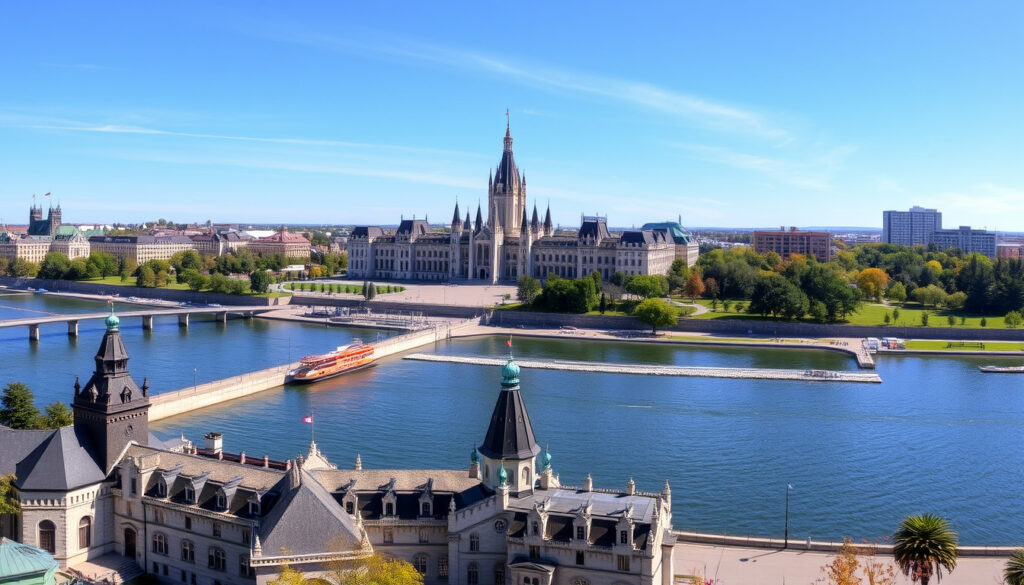
Parliament Hill captivates with Gothic spires, while the Rideau Canal offers seasonal skating, as this guide to top Ottawa attractions explores alongside free urban gems.
Frequently asked questions
What are top 10 things to do in Ottawa?
The essential list starts with Parliament Hill (free tours), the Rideau Canal (walking or skating), the National Gallery of Canada, ByWard Market, Nepean Point, MOSAÏCulture in Gatineau, Paul’s Boat Line canal tours, the Diefenbunker Cold War Museum, the Haunted Walk ghost tours, and Commissioners Park for summer tulips. Each offers a distinct layer of the Ottawa experience.
What things to do in Ottawa today?
Today-focused visitors should check Parliament Hill tour availability (book online), walk the Rideau Canal pathway, and head to ByWard Market for lunch. The National Gallery and Bank of Canada Museum both offer indoor options year-round. In warm months, RentABike under the Rideau Plaza bridge offers same-day canal cycling.
How many days do you need in Ottawa?
Two full days covers the core attractions: Parliament Hill, the National Gallery, the Rideau Canal, and ByWard Market. A third day adds the Diefenbunker, Gatineau exploration, or deeper museum time. Day-trippers from Toronto or Montreal can cover Parliament Hill and ByWard Market in a single long day, but they’ll miss the canal and gallery.
What free things to do in Ottawa?
Free highlights include parliament tours (book online), the Rideau Canal walkway and cycling path, the Bank of Canada Museum, Nepean Point views, ByWard Market browsing, and Commissioners Park in summer. The changing of the guard ceremony at Parliament Hill is free to watch from late June to early August.
What events in Ottawa this weekend?
Current events range from seasonal festivals to recurring activities. The Ottawa’s Best Places event calendar tracks the Undercurrents theatre festival (February 4–14, 2026), Ottawa Grassroots Festival (April 23–26, 2026), and City of Om yoga festival (June 12–14, 2026). Year-round, ByWard Market hosts food tours and the canal offers cycling or skating depending on season.
Best things to do in Ottawa in April?
April brings the Ottawa Grassroots Festival (April 23–26, 2026) and the Stars on Ice figure skating show (April 26, 2026). Late April also marks the start of MOSAÏCulture’s spring planting in Gatineau. The canal skating rink typically closes by mid-March, so April visitors shift to canal cycling and walking.
Things to do in Ottawa for couples?
Couples should prioritize the canal walkway at sunset, dinner at Restaurant e18hteen (French cuisine in a historic stone building), a Paul’s Boat Line tour past Rideau Falls, and the National Gallery’s Canadian and Indigenous Galleries. For something different, the Haunted Walk ghost tour or an evening escape room at the Diefenbunker adds memorability without requiring a full day.
More related posts
 Claudia Sheinbaum: Ethnicity, Husband, Religion, and Biography
 Hotel Avec Jacuzzi Brampton – Top Picks Prices Ratings Near YYZ
 Joel Madden: Biography, Wife Nicole Richie & Irish Roots
 ADP Workforce Now Login: Steps, Troubleshooting & Support
 Oscar de la Renta: Luxury Brand Status, History & Ownership
 Vacations to Go Cruises: Booking, Best Months & Senior Discounts
 St Kitts and Nevis: Safety, Cost, Currency & Travel Guide
 Risk of Rain 2 – Gameplay, Playtime and Multiplayer Guide