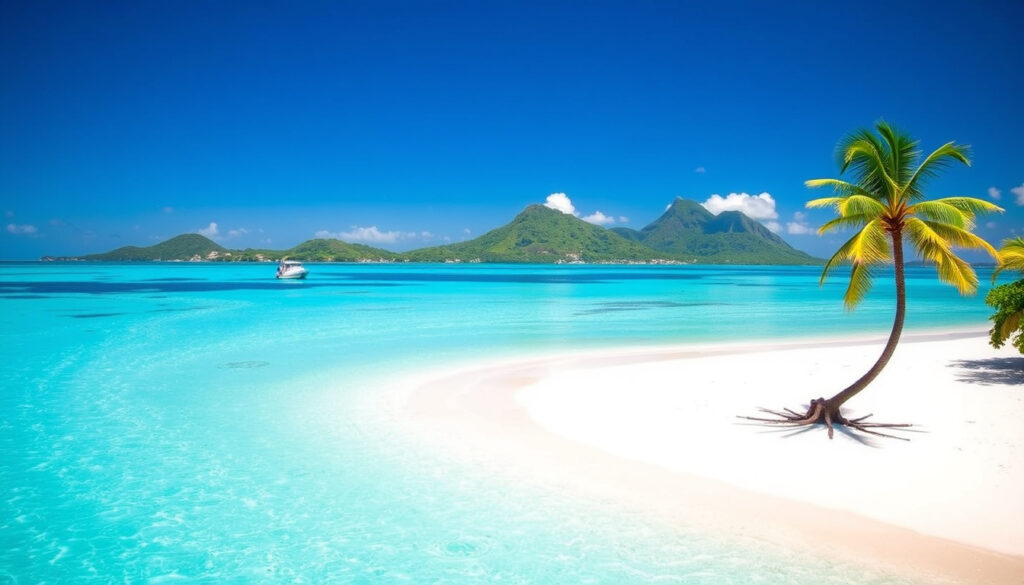
St Kitts and Nevis: Safety, Cost, Currency & Travel Guide
You’ve probably heard the name St. Kitts and Nevis whispered in travel circles — a pair of emerald islands in the Caribbean that sounds like a postcard. But behind the beaches and rainforest hikes lies a more complicated reality: a peaceful tourism haven that also grapples with serious crime in certain areas — this guide cuts through the glossy brochures to give you the facts on safety, costs, currency, and what you actually need to know before you book.
Capital: Basseterre ·
Population: Approximately 48,000 ·
Area: 261 sq km (101 sq mi) ·
Independence: 1983 ·
Currency: Eastern Caribbean Dollar (XCD) ·
Official language: English
Quick snapshot
- St. Kitts and Nevis is a fully independent country, not a British territory (Commonwealth Secretariat)
- Official currency is the Eastern Caribbean Dollar (XCD), pegged at EC$2.70 to US$1 (Audley Travel)
- Violent crime exists, particularly in parts of Basseterre (UK Foreign & Commonwealth Office)
- Exact murder rate for 2025 due to publication delays from official sources (St. Kitts and Nevis Bureau of Statistics)
- Precise impact of tourism on local crime reduction efforts remains unmeasured (Government of St. Kitts and Nevis)
- Number of tourists victimized annually not publicly reported (Government of St. Kitts and Nevis)
- Independence in 1983 established full sovereignty (Encyclopedia Britannica)
- Citizenship by Investment program launched in 1984, now a major revenue source (Henley Global)
- Crime rates rose in the 2020s, prompting enhanced security measures (St. Kitts and Nevis Bureau of Statistics)
- eTA cost increases from US$8.50 to US$17.00 on September 1, 2025 (US State Department)
- Government continues community programs to address violence (Government of St. Kitts and Nevis)
Seven key facts, one pattern: this microstate packs complexity into 261 square kilometres — independent yet facing crime, welcoming yet expensive, using US dollars officially but with a local currency twist.
| Fact | Detail |
|---|---|
| Full name | Saint Christopher and Nevis (Constitutional name) |
| Capital | Basseterre |
| Population | 48,000 (est. 2023) |
| Area | 261 sq km |
| Independence | 19 September 1983 |
| Currency | Eastern Caribbean Dollar (XCD) |
| Official language | English |
| Government | Parliamentary democracy under constitutional monarchy (King Charles III) |
What country does Saint Kitts belong to?
Saint Kitts and Nevis: an independent country
- Saint Kitts and Nevis is a sovereign state, not a territory of another country (Commonwealth Secretariat)
- It became independent from the United Kingdom on 19 September 1983 (Encyclopedia Britannica)
- The country is a member of the Commonwealth of Nations, the United Nations, and the Organization of American States (United Nations)
Constitutional name and historical context
- The constitutional name is Saint Christopher and Nevis, though Saint Kitts and Nevis is commonly used (Encyclopedia Britannica)
- Citizens of St. Kitts and Nevis are not British citizens and do not hold British passports unless through a separate claim (UK Government)
Many travelers assume Caribbean islands are remnants of European empires. St. Kitts and Nevis flipped that script in 1983: a microstate that chose full independence, not overseas territory status — and its citizens carry a passport that proves it.
The implication: if you ask a Kittitian “what country do you belong to?”, the answer is straightforward — they belong to the independent Federation of Saint Kitts and Nevis, not to the UK or any other power.
Is it safe to walk around St. Kitts and Nevis?
Crime statistics and official travel advisories
- Violent crime, including armed robbery and murder, occurs, particularly in certain areas of Basseterre (UK Foreign & Commonwealth Office travel advisory)
- UK government travel advice warns tourists to be vigilant and avoid walking alone at night in isolated areas (UK Foreign & Commonwealth Office)
- Tourist areas and resorts are generally safe but petty theft can occur (UK Foreign & Commonwealth Office)
Safety tips for tourists
- Saint Kitts and Nevis maintains a safety index of 59.98 according to Numbeo data, making it the safest among other Caribbean countries (Get Golden Visa analysis)
- Crime rate in Saint Kitts and Nevis is 45.83 according to Numbeo, classified as quite moderate and comparable to many travel destinations (Get Golden Visa)
- Avoid isolated areas at night and keep valuables secure (UK Foreign & Commonwealth Office)
Travelers booking a Caribbean vacation naturally assume all islands are equally safe. St. Kitts and Nevis confounds that expectation: it scores highest on safety metrics regionally, yet official advisories warn of serious crime. The truth is nuanced — resorts are safe, but walking alone at night in Basseterre is not advised.
The pattern: safety in St. Kitts and Nevis is layered — tourist zones are well-policed, while certain neighborhoods in Basseterre carry real risk. The numbers suggest moderate crime overall, but the concentration matters.
Is St. Kitts and Nevis worth it?
Pros: natural beauty, beaches, culture
- The islands offer pristine beaches, rainforest hiking, and historical sites like Brimstone Hill Fortress (Encyclopedia Britannica)
- Tourism reviews highlight the relaxed atmosphere and friendly locals in resort areas (TripAdvisor)
Cons: cost, crime, limited infrastructure
- Costs for accommodation and dining can be high compared to other Caribbean destinations (Things to Do in Saint Kitts and Nevis)
- Budget/backpacker daily costs range from $88-193 per day, including hostels, street food, and public transport (Things to Do in Saint Kitts and Nevis)
- Mid-range daily travel costs are $270-580 per day, including comfortable accommodations and diverse dining (Things to Do in Saint Kitts and Nevis)
Upsides
- Stunning natural beauty with uncrowded beaches
- Rich history at Brimstone Hill Fortress (UNESCO site)
- Relaxed, friendly locals in resort areas
- Good snorkeling and hiking
- English-speaking population makes travel easy
Downsides
- High accommodation costs compared to other islands
- Serious crime in certain areas of Basseterre
- Limited public transportation
- Fewer all-inclusive resort options than Jamaica or Dominican Republic
- Infrastructure outside tourist zones can be basic
The trade-off: you pay a premium for peace and quiet. St. Kitts and Nevis isn’t a budget destination — it’s a choice for travelers who want uncrowded beaches and historical depth over cheap rum punches and packed resorts.
Can I use US dollars in St. Kitts?
Official currency: Eastern Caribbean Dollar
- The official currency is the Eastern Caribbean Dollar (XCD), pegged at 2.7 XCD to 1 USD (Audley Travel)
- An alternative peg rate of EC$2.67 to US$1 is cited in travel planning resources (Frommers)
- EC$ banknotes are issued in denominations of EC$100, 50, 20, 10, and 5 (Audley Travel)
- EC$ coins are issued in denominations of EC$1, and 25, 10, and 5 cents (Audley Travel)
US dollar acceptance and exchange rates
- US dollars are widely accepted on the islands, though change is usually given in EC dollars at a less favorable exchange rate (Audley Travel)
- ATMs dispense XCD, and credit cards are accepted in most tourist-oriented businesses (Audley Travel)
Accepting US dollars seems convenient, but the exchange math works against you. Paying with dollars means receiving change in EC dollars at a rate that often gives you less value. For travelers from Canada or the UK, double conversion (home currency to USD to XCD) can eat into your budget faster than you expect.
What this means: carry US dollars for convenience, but use a credit card with no foreign transaction fees for larger purchases to avoid the unfavorable exchange spread on change.
Why are there so many murders in Saint Kitts and Nevis?
Crime trends and root causes
- Homicide rates have fluctuated; in recent years, the islands have experienced a high per capita murder rate compared to other Caribbean nations (Wikipedia article on Crime in Saint Kitts and Nevis)
- Crime is often linked to gang violence, drug trafficking, and socioeconomic factors (Wikipedia)
Government response
- The government of St. Kitts and Nevis has implemented enhanced policing and community programs to address violence (Government of St. Kitts and Nevis)
“Homicide rates have fluctuated; in recent years, the islands have experienced a high per capita murder rate compared to other Caribbean nations. Crime is often linked to gang violence, drug trafficking, and socioeconomic factors.”
“Violent crime, including armed robbery and murder, occurs, particularly in certain areas of Basseterre. Tourists should be vigilant and avoid walking alone at night in isolated areas.”
UK Foreign & Commonwealth Office travel advisory
The pattern: St. Kitts and Nevis faces a murder rate that is high by regional standards, but the violence is overwhelmingly concentrated in specific neighborhoods and linked to organized crime, not random tourist attacks. The numbers look alarming on paper; the real risk for visitors is much lower.
Timeline: Key moments in St. Kitts and Nevis
- 1983 — Independence from the United Kingdom (Encyclopedia Britannica)
- 1998 — Referendum on separation of Nevis failed to achieve required two-thirds majority (Encyclopedia Britannica)
- 1984 — Citizenship by Investment program launched by the government (Henley Global)
- 2020s — Increased crime rates noted, prompting enhanced security measures (St. Kitts and Nevis Bureau of Statistics)
The timeline illustrates the nation’s trajectory from independence to facing contemporary challenges in crime and economic reliance on investment programs.
thingstodoinsaintkittsandnevis.com, travel.gc.ca, worldtravelguide.net
For a detailed breakdown of safety statistics and cost comparisons, refer to this St Kitts and Nevis travel guide.
Frequently asked questions
What is the best time to visit St. Kitts and Nevis?
The best time is December to April during the dry season, with temperatures around 75-85°F (24-29°C). Hurricane season runs June to November.
Do I need a visa for St. Kitts and Nevis?
Many nationalities, including US, UK, Canadian, EU, and Australian citizens, do not need a visa for stays up to 90 days. All travelers must complete an Electronic Travel Authorisation (eTA) before arrival. The eTA costs US$8.50 (rising to US$17.00 from September 1, 2025) and can be submitted up to 3 months in advance with approval within 24 hours (US State Department).
How do I get to St. Kitts and Nevis from the US?
Robert L. Bradshaw International Airport (SKB) in Basseterre receives direct flights from Miami, New York, Atlanta, and Charlotte via American Airlines, Delta, and United. From Canada, Air Canada offers seasonal flights from Toronto. Many visitors also arrive via cruise ship docking in Basseterre or Nevis.
What languages are spoken in St. Kitts and Nevis?
English is the official language and is widely spoken. Some locals also speak a creole dialect, but visitors should have no communication issues.
Is public transportation safe in St. Kitts and Nevis?
Public buses are minibuses that run on fixed routes in and around Basseterre. They are generally safe during daylight hours but can be unreliable. Taxis are widely available and regulated; agree on fares in advance.
What plug types are used in St. Kitts and Nevis?
The standard is Type A and B plugs (same as the US and Canada), with a voltage of 110V and frequency 60Hz. North American travelers should not need adapters.
Can I drink tap water in St. Kitts and Nevis?
Tap water is generally safe to drink in most areas, but many visitors opt for bottled water, especially outside major hotels. Bottled water is widely available.
More related posts
 Wesley Ridge Fire Update: Status, Cameron Lake, and Safety Rules
 Things to Do in Ottawa: Top 10, Itineraries & Weekend Ideas
 Adidas Adios Pro 4 vs Alphafly 3: Marathon Review
 Train from Toronto to Montreal: Schedule, Prices & Times
 What Kills Toenail Fungus Instantly? Myths & Fast Treatments
 PSG vs Real Madrid: Head-to-Head, Results & History
 Houses for Sale in Saskatoon: 657+ Listings & Prices Guide
 Neil Young Tour Cancelled – Reasons Behind the Decision